
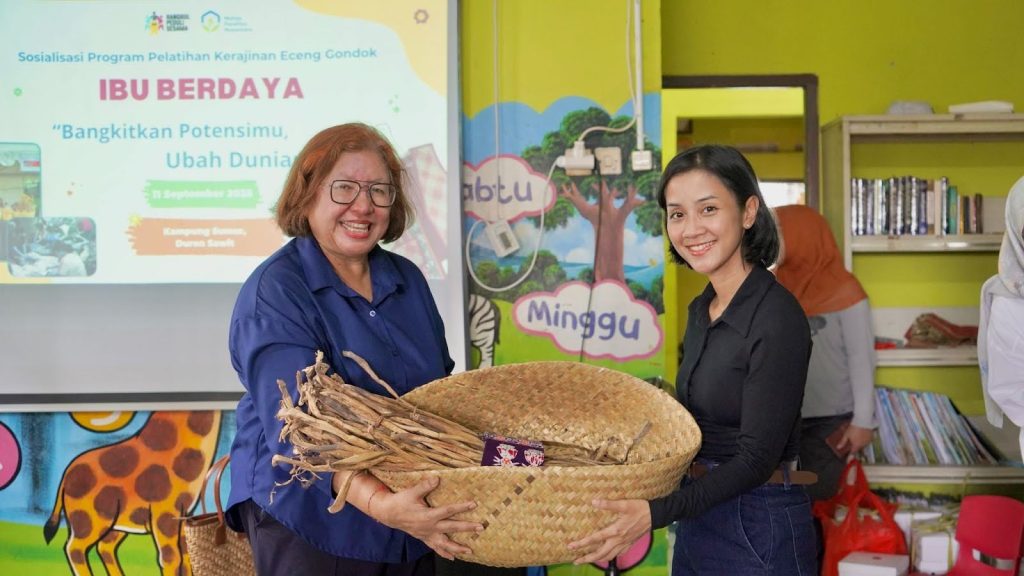
As a foundation dedicated to empowering waste workers, including waste pickers, Mahija has partnered with Coca-Cola Europacific Partners (CCEP) to implement a skills-building program for waste pickers through sustainable organic waste management. In addition to providing access to new skills, the program also aims to strengthen their economic well-being.
Through two main initiatives, the Berdaya program provides hands-on training, ranging from maggot farming through the “Berdaya Bersama” program to water hyacinth crafts through the “Ibu Berdaya” program
This program not only creates business opportunities for waste pickers but also empowers them by providing them with the chance to earn extra income for their daily needs.
There are many benefits to be gained from these two programs—initiated by Mahija and CCEP—in the area of sustainable organic waste management. What do Mahija’s sustainable economic programs for waste workers entail? Read this article to learn more.
A Program by Mahija and CCEP on Organic Waste Management for Waste Pickers
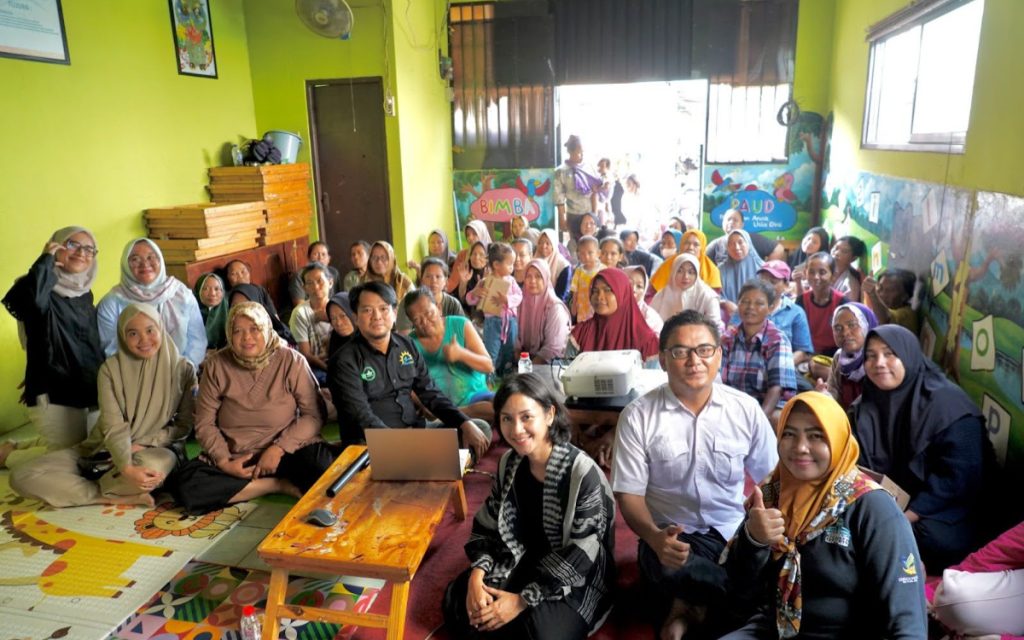
Most waste workers do not earn enough each month to meet their needs by scavenging alone. Therefore, Mahija launched this program to boost the daily economic activity of scavengers by recycling waste into items of economic value.
The two programs are called “Berdaya Bersama” (Empowering Together), which focuses on maggot farming, and “Ibu Bersama” (Mothers Together), a program that repurposes water hyacinth waste into woven crafts. These programs are projected to assist 200 waste pickers across six target areas in the Greater Jakarta region.
Some of the benefits of this program include:
- Processing water hyacinth waste and raising maggots are good for environmental conservation
- Helping waste pickers develop their small-scale business potential
- Increase your income on a regular basis with a fixed monthly amount
- Promoting economic self-reliance among waste workers
- Improving the welfare of waste management workers by creating business opportunities through collaboration
The following is an overview of the program organized by Mahija to promote the circular economy among recycling workers and support sustainable organic waste management.
1. Empowering Together Program
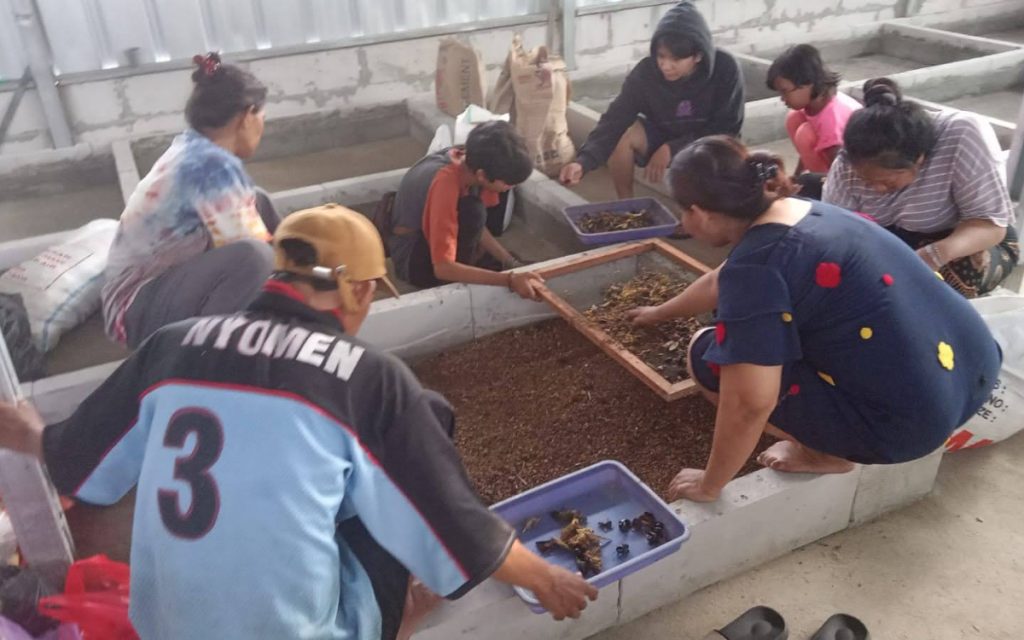
This is a Black Soldier Fly (BSF) maggot farming program that is well-known for its effectiveness in sustainable organic waste management. The maggot farming initiative was launched when Mahija held an outreach session for 20 families of waste workers in the target area. This outreach activity involved cross-sectoral collaboration to ensure the program ran smoothly.
The program was also attended by Ardhina Zaiza, chairperson of the Mahija Foundation’s board of directors, as well as several stakeholders from various sectors who joined in the outreach activities for Black Soldier Fly (BSF) maggot farming, including:
- Munzir, Head of Neighborhood Unit 10, Klender Subdistrict
- Ali Yudo Kisdiyanto, Head of the Community Participation Section, East Jakarta Environmental Agency
- Sanudi, Civil Service Administration, Environmental Affairs Sub-Office, Duren Sawit Subdistrict
- Nurlis Kumala Sari, Field Supervisor for Klender Village, Duren Sawit Subdistrict
A total of 20 waste pickers participated in this training, learning firsthand how to raise maggots. Through this initiative, the goal is for them to earn an additional income of Rp. 300,000 per month.
These BSF maggots offer numerous benefits in the farming process. Not only are they effective at cleaning up the environment by consuming organic waste, but they can also be sold to farms as feed for livestock such as poultry and freshwater fish, and they can be exported as well.
2. Empowered Mothers Program
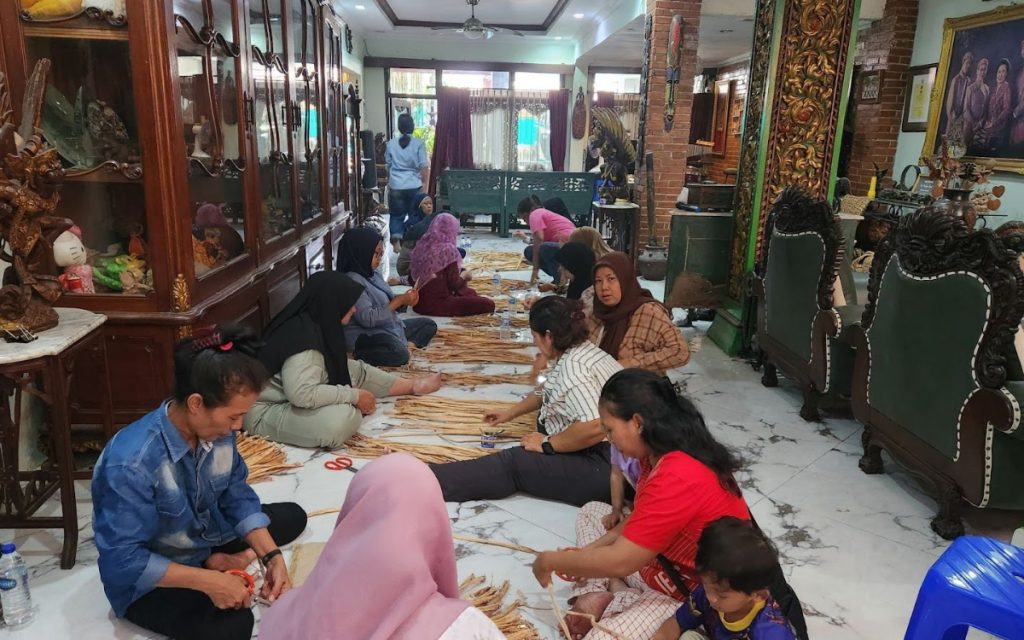
Waste management workers are also encouraged to boost the local economy and promote sustainable organic waste management through a program called “Ibu Berdaya,” which focuses on utilizing water hyacinth to create woven crafts with economic value for sale.
Water hyacinth is known as an aquatic plant and is considered a weed because it has a negative impact on water quality and causes sedimentation if allowed to proliferate unchecked. In the “Ibu Berdaya” program, women working in recycling are trained on how to process this “weed.”
The training was attended by at least 18 enthusiastic women waste pickers who were taught how to transform water hyacinth into woven products such as woven tote bags, farmer’s hats, woven trash bins, and other handicrafts, alongside Ardhina Zaiza, chairperson of the Mahija Foundation’s board of directors.
Through this training, the women waste pickers have learned how to manage waste that harms aquatic ecosystems, and they have also gained a deeper understanding of the potential of sustainable waste recycling, which can provide them with a steady monthly income. Approximately 40% of the women waste pickers are expected to earn a steady income of Rp 150,000 per month from selling these water hyacinth woven products.
Conclusion
Improving the living standards of waste pickers—a key focus of Mahija—also involves promoting financial inclusion for recycling workers. To boost their circular economy, implementing sustainable organic waste management practices—such as maggot farming and water hyacinth cultivation—can serve as an effective approach to environmental stewardship and help waste pickers launch small businesses to improve their well-being.