
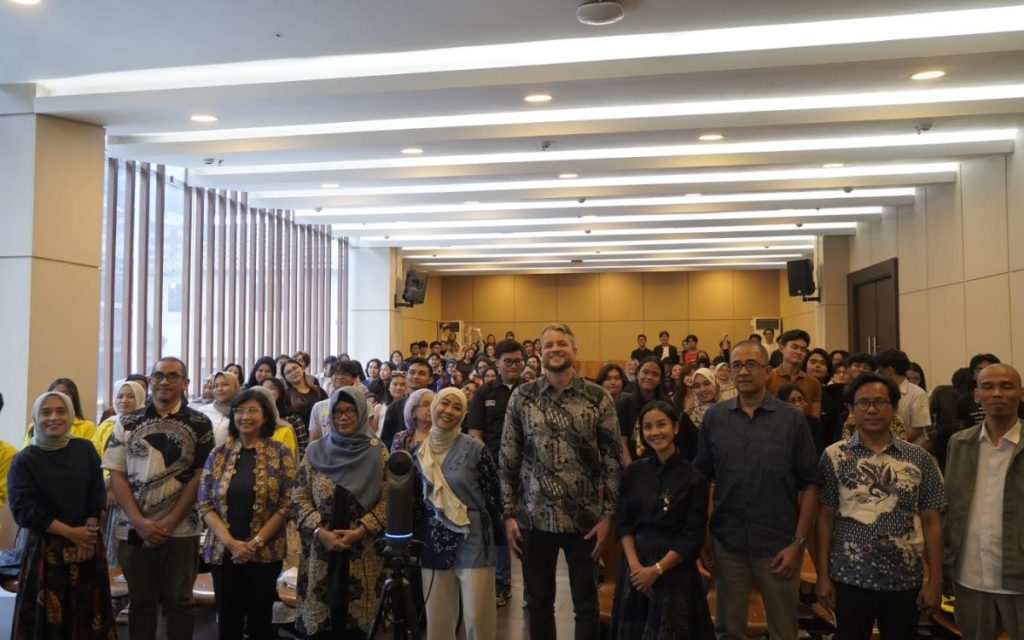
Waste management requires cross-sector collaboration, including educational institutions, which play a crucial role in shaping the mindset of the younger generation. Therefore, Mahija has once again partnered with the University of Indonesia through its Faculty of Social and Political Sciences (FISIP UI) to foster a culture of more responsible waste management on campus through the KOLASTIK program—a movement aimed at nurturing a responsible generation.
On this occasion, students were encouraged to understand the importance of the waste recycling supply chain and waste management through logical reasoning linked to environmental conservation. Students were also introduced to a way of thinking that connects environmental cleanliness with waste management that holds economic value.
Through this approach, participants are encouraged to understand that recyclable waste actually has economic value if it is collected and handed over to the appropriate parties for processing. It is hoped that this awareness will encourage changes in daily behavior while fostering a generation that is responsible in managing waste.
Here is more detailed information about the KOLASTIK program, a collaboration between Mahija and the Faculty of Social and Political Sciences at the University of Indonesia.
The Mahija KOLASTIK Program in Collaboration with the Faculty of Social and Political Sciences, University of Indonesia
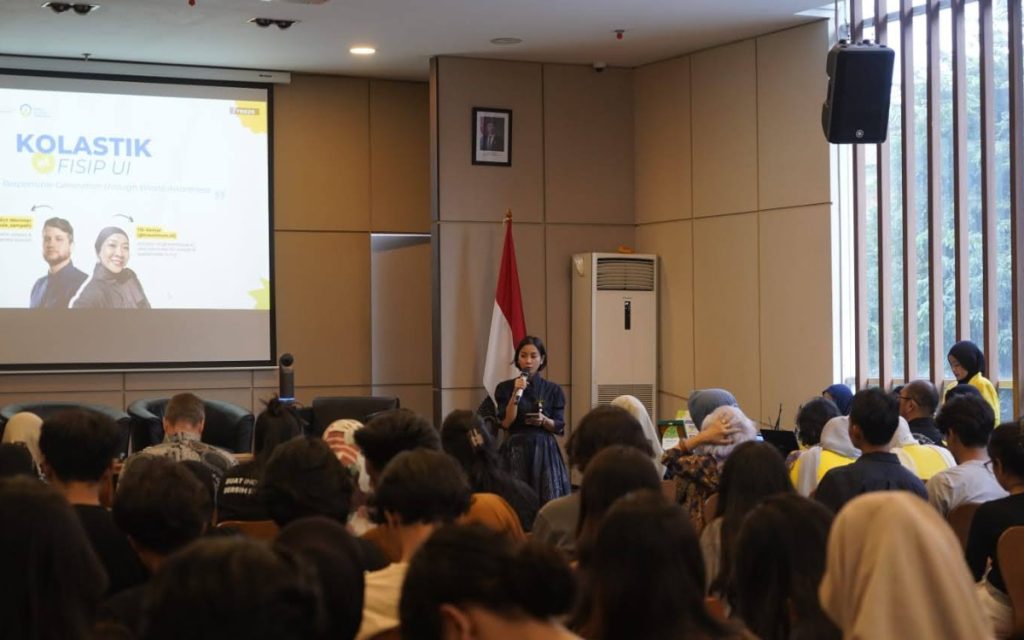
The KOLASTIK program is being held once again, with the education sector playing a key role as a cornerstone for the development of modern and sustainable waste management. This waste education initiative underscores the significant role that recycled waste plays in waste management, which can boost the circular economy and foster a responsible generation.
This initiative is designed as a long-term partnership between Mahija and the Faculty of Social and Political Sciences at the University of Indonesia, focusing on three main pillars: education, research, and community service through internship programs. The initial phase currently being implemented is the education pillar, with a focus on instilling awareness from an early age that significant changes in waste management always begin with simple daily habits, such as sorting waste and ensuring that PET bottles are recycled properly.
As a first step, in November 2025 Mahija organized KOLASTIK (Plastic Recycling Collaboration) at the Faculty of Social and Political Sciences, University of Indonesia. This program is one of Mahija’s initiatives to raise public awareness about waste management and the circular economy. Through KOLASTIK, Mahija not only shares knowledge but also encourages students to recognize that they play a vital role in the ecosystem of change. Students are not merely recipients of information; they can also become agents of change who help foster a generation that is responsible toward environmental issues.
Under the theme “Building a Culture of Responsible Waste Management among Youth as a Foundation for a Sustainable and Circular Economy,” KOLASTIK at the Faculty of Social and Political Sciences, University of Indonesia, is designed to create a space for dialogue that is relevant to the daily lives of young people. The discussion goes beyond environmental issues alone, highlighting how sustainable practices can create opportunities for green jobs and foster the emergence of new social enterprises.
Who are the speakers at the KOLASTIK program with the Faculty of Social and Political Sciences, University of Indonesia?
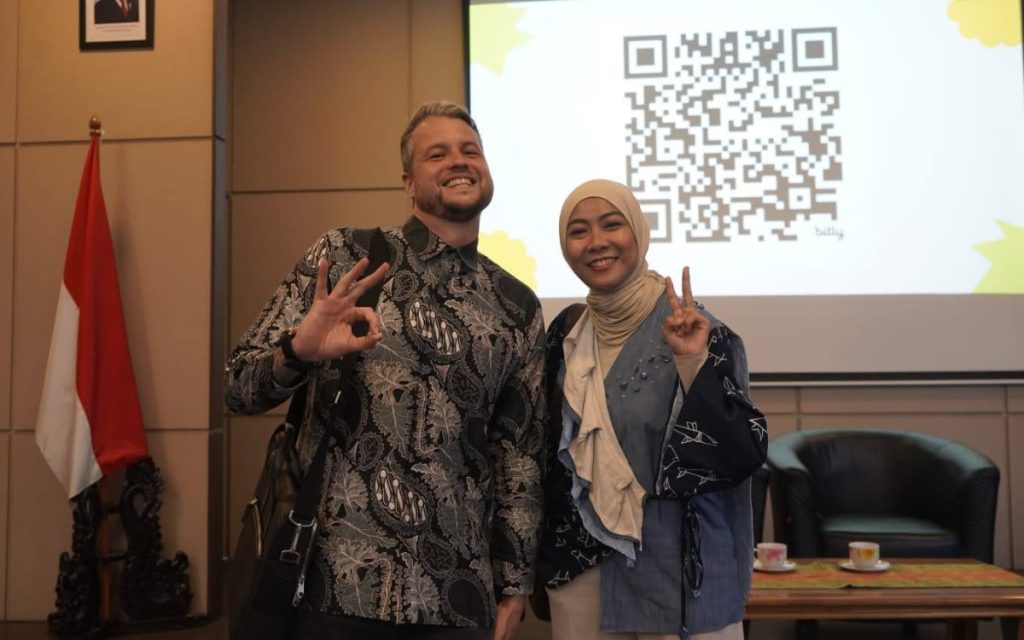
The KOLASTIK event at the Faculty of Social and Political Sciences, University of Indonesia, was made even more meaningful by the presence of two speakers who are actively involved in environmental issues and connect well with the younger generation. These two speakers shared their perspectives on waste management while encouraging students to play an active role in fostering a generation that is environmentally responsible. Here is the list of speakers at this event:
1. Benedict Wermter
The first speaker is Benedict Wermter (@bule_sampah), a content creator and environmental enthusiast known for actively advocating for waste management issues in Indonesia.
During the discussion session, Benedict encouraged the students to understand the real-world impact of unmanaged waste and to grasp the concept of the circular economy by turning waste into economic opportunities.
Benedict emphasized that student participation doesn’t have to start with big steps. In his view, change can begin with simple actions taken consistently. He also noted that small, ongoing actions can serve as a crucial foundation for bringing about greater change in the future.
2. Titiw Akmar
In addition to Benedict Wermter, the event also featured Titiw Akmar, a content creator from the @travelmom.id account. During her session sharing her experiences, Titiw explained how digital storytelling can be a powerful tool for raising public awareness of environmental issues. She also shared her personal journey in promoting a sustainable lifestyle through social media.
Titiw emphasized the importance of consistency, authenticity, and courage in conveying positive messages in the digital space. In her view, social media can serve as a powerful catalyst for driving tangible changes in public behavior.
The KOLASTIK event at the Faculty of Social and Political Sciences, University of Indonesia, was attended by 220 participants, both online and in person. Student enthusiasm was evident throughout the program. Through the #GerakKolaborasi campaign, Mahija encouraged students to start taking action in their immediate surroundings—whether on campus or at home—with simple steps like sorting waste. Students also began participating in the campaign by mobilizing their immediate circles through social media.
Conclusion
The KOLASTIK Program at the Faculty of Social and Political Sciences, University of Indonesia, serves as a platform for Mahija to foster a generation that takes responsibility for environmental issues—such as waste management, which offers numerous opportunities to advance the circular economy—and to preserve the Earth’s environment so that it remains habitable through the maintenance of cleanliness. Moving forward, Mahija remains deeply committed to addressing waste as an environmental issue by raising awareness and engaging diverse communities in the importance of keeping the Earth clean.