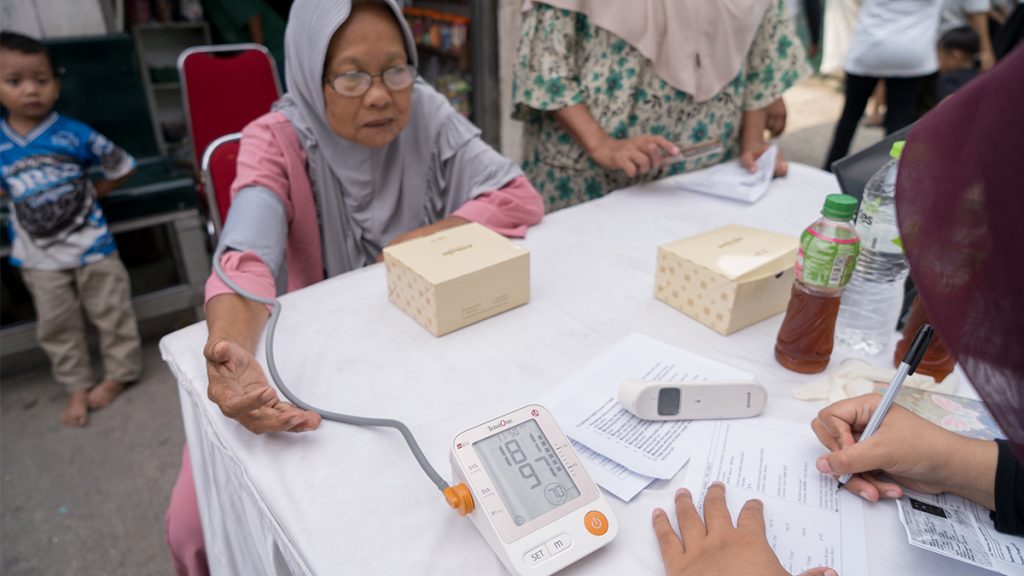
Yayasan Mahija Parahita Nusantara held the Sahabat Sehat Mahija (SSM) program in the Duren Sawit area, East Jakarta, on Thursday (4/6/2026). This second SSM event in Duren Sawit was attended by 152 people, consisting of waste workers, their families, and residents of the surrounding scavenger community. At the same time, the Mahija mobile school was also present, providing access to informal education.
“This activity is very beneficial. We can find out about our health condition. It’s close to where residents live and save time. Because there are also residents who can’t go to the hospital. At the hospital, you have to take a number and queue,” said Siti Ulfa, a resident of Klender, Duren Sawit.
Informal waste workers are exposed to various risks while collecting and sorting waste. Direct interaction with unsorted waste increases health risks, such as contact with hazardous materials as well as household waste like satay skewers, used diapers and sanitary pads, and medical equipment.
Unfortunately, access to healthcare that can be reached by recycling warriors and their families is limited. In addition, occupational safety practices and preventive information while working have not been optimally implemented.
“With a community-based approach, we hope the knowledge and health of the recycling warriors’ community will improve. Bringing healthcare access closer while providing education is in line with Mahija’s efforts to empower recycling workers and their families,” said Ardhina Zaiza, Chairperson of Yayasan Mahija Parahita Nusantara.
Yayasan Mahija collaborated with Klinik Pratama Amelia Media and Synergy in organizing SSM, supported by volunteers. Basic health screenings were conducted through blood tests, medical history assessments, and the provision of medication. In 2026, SSM has reached 250 people in Duren Sawit and Tanah Tinggi, Central Jakarta. Of that number, 70 percent are informal waste workers.
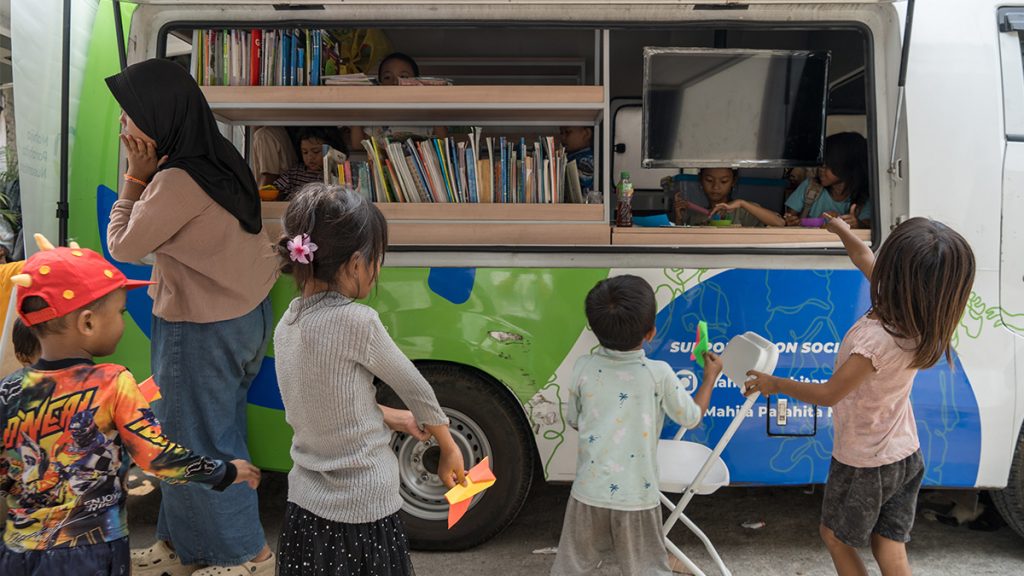
Additional joy was visible on the faces of the children, as they received an extra mobile school visit. The informal waste workers’ area normally receives regular mobile school visits on the second and fourth Tuesdays of each month. With SSM taking place, they got one extra day on Thursday.
During the mobile school visit, children can read various types of books, draw, play educational games, and study school subjects such as mathematics and English.
“I’m happy when the mobile school comes. I can draw. I want to be a flight attendant, but I also love drawing,” said Febri.